
Concordats — separation of church and state — human rights
This site examines how Vatican concordats entangle church and state,
and can prevent the free exercise of some human rights.
A concordat is a legal agreement between a country and the Vatican. It can set up a theological fiefdom where certain human rights do not apply—and where they can never again be reintroduced without the consent of the Catholic Church. This is why concordats represent a fundamental threat to both democracy and human rights. The Vatican finds many uses for its over 200 current concordats. In May 2012 the Italian bishops even said that their concordat excused them from having to report to the police suspected cases of child abuse by fellow priests. Concordat Watch is an online resource containing dozens of concordat translations, (most appearing in English for the first time), as well as related documents, general background articles and expert commentary. The editor is Muriel Fraser (who is responsible for all unsigned material) and the platform is generously provided by Notanant.
What are concordats? Concordats are international treaties with the Vatican that may range from granting little more than diplomatic recognition to a legally binding commitment to observe key aspects of Vatican doctrine and to have taxpayers subsidise the Church. Because the state may be put under pressure to enforce these Vatican policies, Concordat Watch also includes material on church-state separation. In other words, it treats political, but not religious secularism. As the Armenian author Sevan Nisanyan said, “I am not in the habit of discussing religious belief. ...[It] only becomes fair game when it tries to impose itself by force or by legal subterfuge.”
What’s the harm?
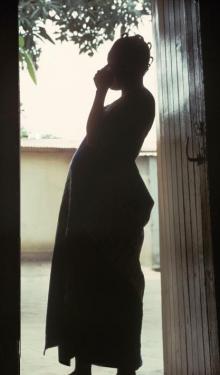
Already a quarter of all health care in sub-Saharan Africa is provided by the Catholic Church. The Order of Malta has a national branch in South Africa whose logo has a Zulu shield. This work is increasingly being cemented by “concordats” between African nations and an order that stands directly under the pope. This means no contraception and no abortions even for rape victims in the Congo.
Laws can be changed by parliaments, but concordats can’t. That's because they’re supposed to be international treaties, that is, agreements between a real country and the Holy See (the Vatican).
Even in democracies there is only a brief period, when the legislature has any say over a concordat. That is the time between when the treaty text is revealed and when the ratification vote takes place. This can sometimes be only a matter of days, which does not allow proper legal scrutiny of a very complicated document. A number of other legislative tricks may be used to help get the concordat through: sixteen of these are revealed here. Once the concordat is ratified it is set in stone. That's because treaties cannot be changed unilaterally. Any alteration requires the consent of the Vatican.
And in a dictorship it's still worse. The concordat may be rubber-stamped by the military junta or even go through with no ratification at all, for the signature of the dictator or his foreign minister is enough. Yet when the dictator is toppled, his concordat remains. Read more
2. Concordats can ensure a never-ending transfer of state funds to the Church
Sometimes the money transfer is justified as compensation for church property nationalised as long as 200 years ago. Concordats can lock in inflation-adjusted payments that cannot be ended unless the Vatican agrees.
Concordats often shift funds to the church by requiring that Catholic schools, hospitals and other agencies must be paid for by the state. This gives the Church the say over what is taught and what services are offered, without having to pay the tab. A concordat can also help Church agencies get tax exemptions, even for Church-run commercial enterprises. And, despite all the state money flowing in, a concordat can ensure that the finances of the Church are kept secret. Read more
3. Concordats can infringe on human rights
By giving advantages to one religious group, concordats can violate the requirement that all citizens and all religions be treated equally. Occasionally concordats have outlawed divorce, even for non-Catholics. Concordats can also anchor other parts of Canon (or church) Law by stipulating that this is to be used within Church institutions. However, since these also include social agencies, many non-clerics and even non-Catholics may find themselves legally obliged to obey Church rules.
A concordat can also anchor Church doctrine in a country's legal system. For instance, the concordat with Hitler (art. 9) ensures that even crimes cannot be reported if they have come to light through confession. This has contributed to perpetuating child abuse. Read more
Featured Topics
What are Concordats?
These church-state accords give the Church massive state subsidies and other privileges. They can effectively force liberal Catholics to observe orthodoxy, and can disadvantage non-Catholics, as well.
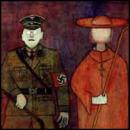
Hitler’s concordat
This concordat with Nazi Germany was negotiated by Cardinal Pacelli (later Pius XII). It is still substantially in place, although all the other concordats with Fascist leaders have been revised or replaced.

Côte d’Ivoire concordat
A concordat was made especially for “the basilica in the bush” which is as big as St. Peter’s. The concordat removes money from this desperately poor country for the upkeep of the huge and empty basilica.
₪₪₪₪₪₪₪₪₪₪₪₪₪₪₪₪₪₪₪₪₪₪₪₪₪₪₪₪₪₪₪₪₪₪₪₪₪₪₪₪₪₪₪₪₪₪


